

In precision machining, accuracy measures how closely a finished part’s dimensions match the desired CAD design, while consistency ensures that precise measurement is ideally repeated across every single unit in a production run. Both depend on tight dimensional tolerances.
When you drive a car, fly in an airplane, or even utilize a high-tech smartphone, you depend on machines that are built from hundreds or thousands of small, ideally shaped pieces. These pieces don’t only magically fit together on their own. They are created through an extremely controlled and digital procedure. This procedure is responsible for making precision machining parts.
Table of Contents
But what actually does that mean? In easy words, machining is the procedure of cutting away material from a solid block to make a particular structure. Consider it like a sculptor chipping away at a block of marble to make a statue. However, rather than a hammer and chisel, advanced factories utilize modern computer-controlled machines.



When we talk about precision machined components, we are discussing components that are cut to precise, almost microscopic measurements. Even a mistake as thin as a human hair can lead to an engine failing or a medical device stopping working. This is why precision components manufacturers concentrate on two very crucial words – accuracy and consistency.
What Does Accuracy Mean?

Accuracy is how closely a manufactured part matches the exact dimensions mentioned on the engineer’s blueprint. It is a measure of correctness and truthfulness to the target design.
For instance, imagine an engineer designs a stainless-steel drive shaft that should actually be 50.00mm in diameter. If a machine cuts that piece of metal and the final measurement is 50.mm, that component is 100% correct. If it measures 50.15mm, it is wrong. Accuracy is strictly about hitting the bullseye.
What is Precision (Consistency)?
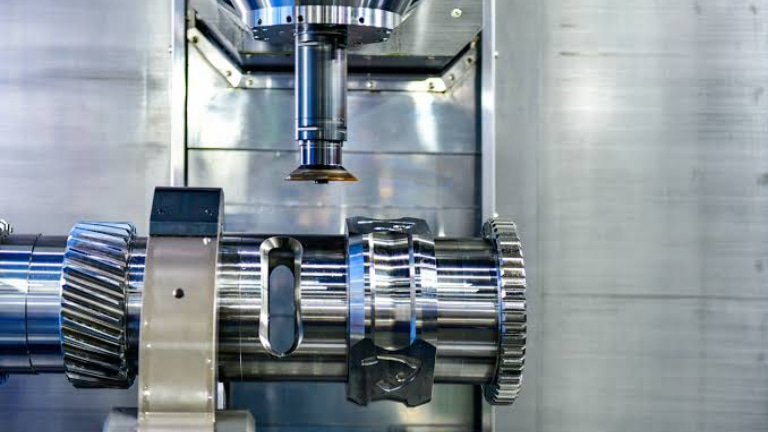
Precision is the machine’s capability to reproduce the precise result over and over again across a whole production run. It doesn’t exactly care where the blueprint target is; it only cares about uniformity.
If a machine cuts 1,000 shafts, and every single one of them measures 50.15 mm, the machine has high consistency. However, because the blueprint asked for 50.00 mm, the batch is constantly incorrect.
The Universal Dartboard Analogy –
- Accurate but Inconsistent – You throw five darts. They are everywhere, but their average center point is right over the bullseye.
- Consistent but Inaccurate – You throw five darts. All five clusters touch in the top-left corner of the board, not in the middle at all.
- Accurate and Consistent – All five darts land squarely in the bullseye. This is what precision machined components are all about.
The Crucial Role of Consistency in Manufacturing
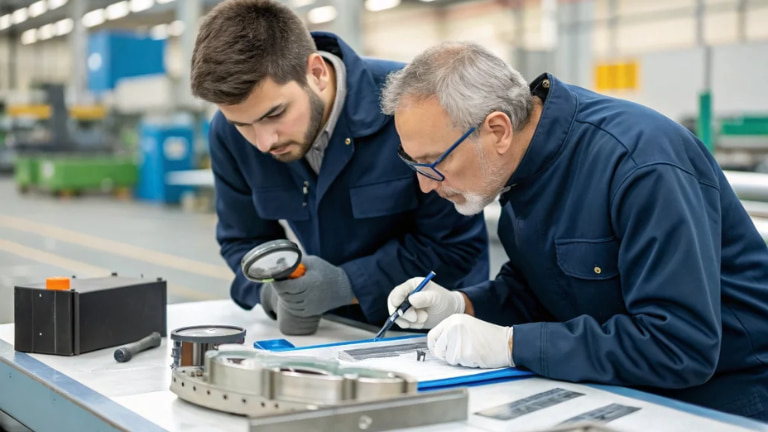
We understand that accuracy is hitting the target, and precision is hitting the exact spot repeatedly. So, where does consistency fit in?
Consistency is the real-world application of both precision and accuracy over a long time. It means sustaining those high standards across various batches, various days, and various machine operators.
Why is consistency so extremely crucial?
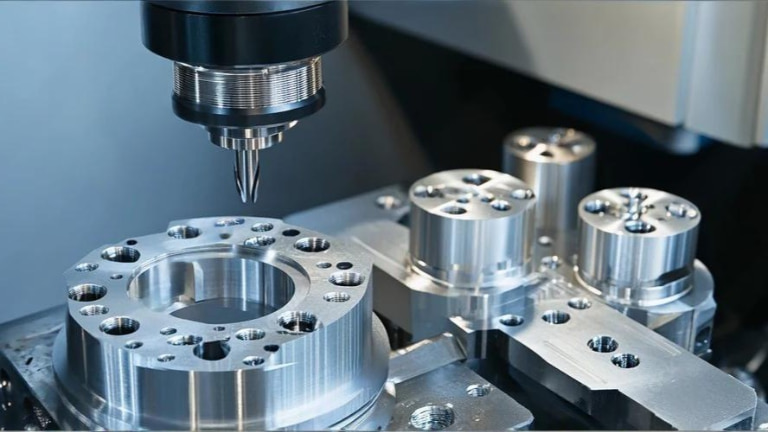
1. Perfect Assembly – Contemporary machines are made of several components coming from various locations. If a car engine has pistons that differ even a little in size from batch to batch, the engine will vibrate, leak oil, or thoroughly seize up. Consistency guarantees that components fit together like an ideal puzzle.
2. Safety and Reliability – In industries like aerospace and medicine, there is no room for mistakes. An inconsistent component on an airplane wing can result in a catastrophic failure. In a hospital, a surgical tool should actually behave the way the doctor expects it to.
3. Cost Savings – Making errors costs money. If a factory produces a batch of inconsistent components, those components should be thrown away. The raw material is wasted, and the time spent making them is gone. By sustaining high consistency, precision components manufacturers save money, decrease waste, and maintain costs lower for customers.
4. Building Trust – Corporations that purchase components wish to understand they can trust their suppliers. A manufacturer that consistently delivers ideal components makes a robust, trusting connection with their customers.
How Do Manufacturers Achieve Accuracy and Consistency?
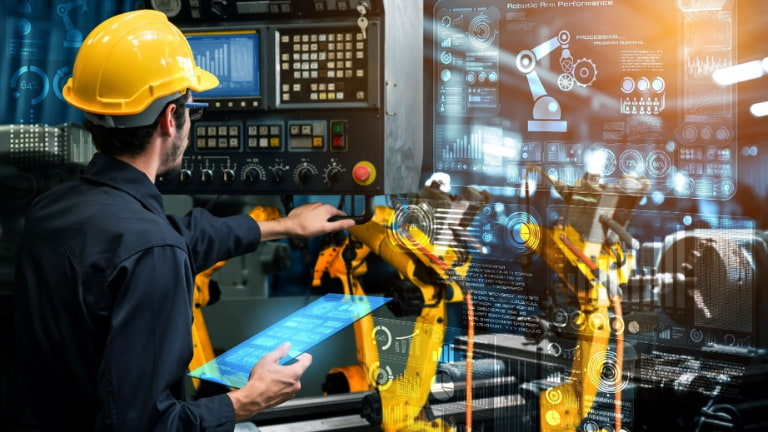
You might be wondering, how precisely do factories handle cutting hard metals with microscopic perfection, time after time? It takes a blend of high-tech tools, careful planning, and human professionals.
Here are the primary tools and methods utilized by a top-tier precision machined components manufacturer –
1. Advanced CNC Machines
CNC stands for Computer Numerical Control. Rather than a human turning wheels to move a cutting blade, a computer reads a technical blueprint and manages the machine’s movements. Contemporary CNC machines are extremely modern. They can move in several directions at once and make cuts that are thinner than a human hair. Because computers don’t get tired or distracted, CNC machines are the main way factories gain ideal repeatability.
2. High-Quality Cutting Tools
The actual equipment that cuts the metal should be highly sharp and robust. Over time, cutting tools wear down. Even a small bit of wear can modify the size of the component being cut. Top manufacturers continuously supervise their equipment and replace it before they get dull, confirming the last component looks just as good as the first part.
3. Controlling the Environment
Did you understand that metal expands when it gets warm and shrinks when it gets cold? If a factory is hot during the day and cold at night, the metal component’s size will actually alter while it is being cut. To control this, precision manufacturing features are extremely climate-controlled. They maintain the temperature and humidity precisely the same 24 hours a day.
4. Rigid Work-holding
When you are cutting something, ideally, the material can’t move at all. Manufacturers utilize specific clamps and fixtures to lock the raw metal strictly in place so it doesn’t vibrate or shift during the machining procedure.
5. Rigorous Inspection and Quality Control
You can’t just assume a component is right; you need to prove it. Manufacturers utilize extremely sensitive measuring gadgets, like Coordinate Measuring Machines, lasers, and technical micrometers, to double-check their work. They examine components constantly during the entire day to catch any small mistakes before they become big issues.
The Rise of India as a Global Manufacturing Hub
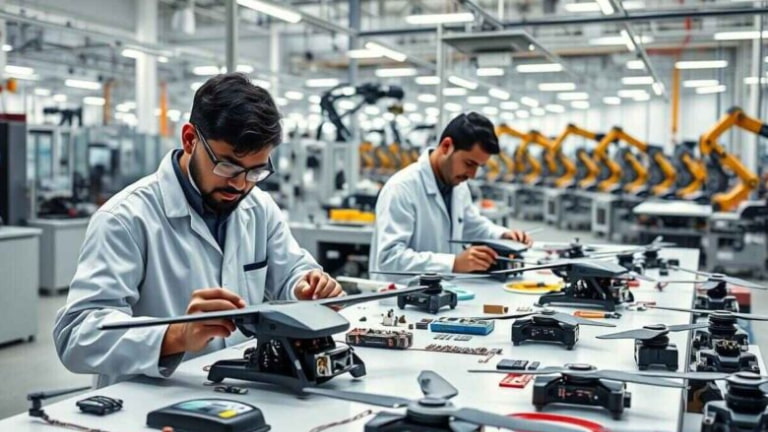
Over the previous few decades, the international manufacturing landscape has altered remarkably. Corporations around the world are seeking trusted partners who can deliver top-quality elements without breaking the bank. This hunt has led to a huge rise in the prominence of precision machined components manufacturers in India.
India has quickly become a hotspot for high-tech manufacturing. The nation boasts a huge workforce of extremely educated engineers, proficient machinists, and ambitious business leaders. Furthermore, the Indian government has highly promoted initiatives like Make in India, which motivates factories to upgrade their technology and adopt international quality norms.
Nowadays, Indian manufacturers aren’t only making common parts; they are producing crucial elements for international aerospace, protection, automotive, and medical corporations. The capability to merge affordability with top-class precision has made India a most sought-after destination for corporations needing complicated machining work.
Setting the Benchmark – Global Precision Pvt Ltd
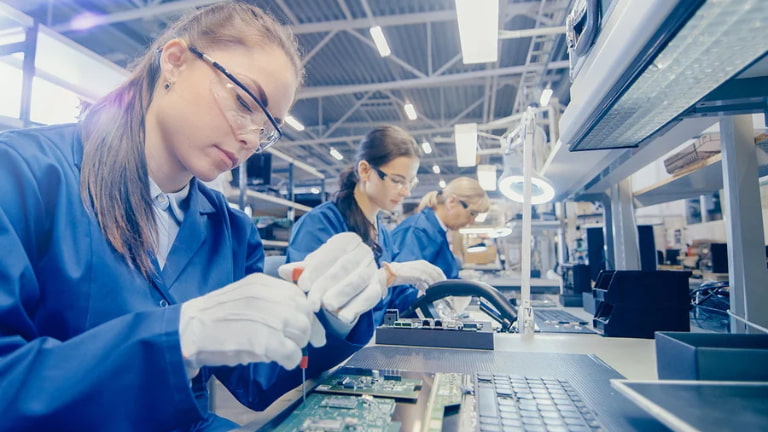
When wondering about an example of a corporation that embodies the principles of precision and accuracy, one has to look no further than Global Precision Pvt Ltd. This company has made itself a reliable leader in the market.
1. Diverse Expertise – They have expertise in serving extremely demanding sectors, including Aerospace, medical, defense, electronics, and automotive industries. These are sectors where a shortage of accuracy can literally mean the disparity between life and death.
2. Modern Infrastructure – They highly invest in the current vertical machining centers and contemporary CNC tools, permitting them to tackle complicated precision metal parts fabrication with ease.
3. Comprehensive Services – Beyond only making standard components, they deliver customized manufacturing, reverse engineering, and the creation of complicated injection molds and sheet metal dies.
4. Unwavering Quality – Their mission concentrates heavily on providing best-in-class quality. They work as reliable partners for Original Equipment Manufacturers, Public Sector Undertakings, and international clients.
Corporations like Global Precision prove that precision machined components manufacturers in India are more than capable of meeting the strict, exacting needs of the contemporary international market. They ideally illustrate how making an investment in proficient people and high-tech machines leads to unparalleled precision and accuracy.
Conclusion
As we look around at the vehicles we drive, the medical tools that keep us healthy, and the airplanes that connect the world, it is simple to take them for granted. But beneath the shiny exteriors and technical screens lies the real foundation of contemporary technology: ideally crafted metal and plastic components.
Comprehending the distinction between accuracy and precision assists us in appreciating the extreme effort that goes into manufacturing. Consistency is the magic part that ties them both together, making sure that thousands of components work in ideal harmony.
The work completed by precision components manufacturers is usually hidden from the public eye, but it is definitely crucial to our regular lives. From the stringent climate control of the factory floor to the modern CNC machines and the proficient hands of the professionals, every move of the procedure is developed to remove mistakes. As technology continues to advance, the need for even tighter tolerances and smaller components will only expand. Thanks to industry leaders and top-tier facilities globally, we can believe that the machines we depend on will continue to function protectively, effectively, and accurately.