
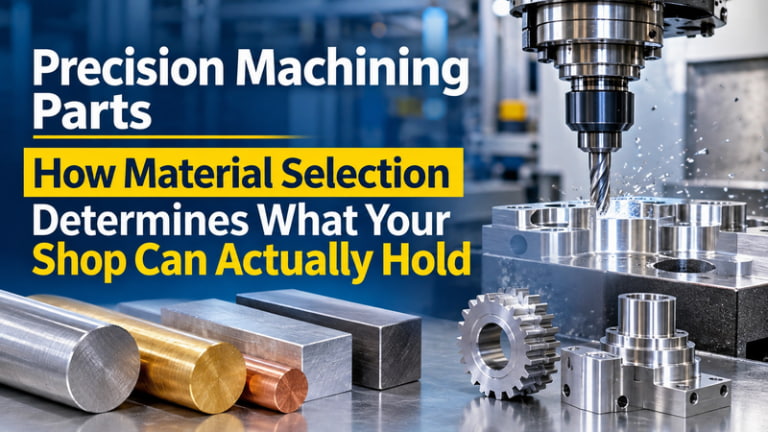

The material selection for manufacturing precision machining parts directly limits how exact, smooth, and consistent a precision shop can make a part. Even with high-end CNC machines, a material’s thermal expansion, internal residual stress, and machinability determine whether a part stays spec after it leaves the spindle.
Even with the best CNC machines and skilled programmers, you can still miss your tight tolerances if you choose the wrong material. Many precision machining parts shops blame their tooling or setups, but the real issue is wrong material selection. Every metal or plastic reacts differently to cutting heat, tool pressure, and clamping force.
Table of Contents
The material you choose sets the limit on how exact your machines can be. Read this helpful guide to understand how material selection impacts and delivers accurate parts every time.



Why Material Selection Matters in Precision Machining
For precision parts manufacturing, choosing the right material matters. Choosing the right raw metal or plastic directly controls how accurately a part can be cut, how long it will last, and how much the final project will cost.
1. Machinability & Tool Life
Softer metals like aluminum and brass cut easily and cause less tool wear. They allow factory machines to run longer without frequently changing cutting blades. They save your time and production costs. Harder metals like titanium or stainless steel, used by precision components manufacturers, are difficult to cut and wear down sharp tools faster. They also need proper coolant plans to control heat and reduce tool damage.
2. Mechanical Strength & Durability
Choosing a strong material for precision parts manufacturing ensures the final parts are safe. This makes sure the parts handle stress and load during use. Components used in demanding conditions often need strong and high-performance alloys like Inconel or titanium. These materials maintain the parts’ structural stability and prevent damage over time.
3. Thermal & Chemical Stability
Medical implants, energy sectors, and marine precision machined components often face high heat and corrosive chemicals. So, manufacturers choose materials that can resist rust, maintain their shape, and withstand heat during use.
4. Cost & Supply Chain Viability
Raw materials you choose must fit your project budget and be easy to buy from trusted suppliers on time. If you choose rare or overly expensive metals, it can interrupt your factory production and make the final product very expensive. By choosing reusable or recyclable materials, you can lower long-term material overhead despite a higher initial price.
Common Materials Used for Precision Machined Components or Parts
The right material selection is the most important step in making precision machined components and parts. Different metals and plastics offer unique benefits like strength and lightweight. Top-rated manufacturers choose the material based on their clients’ demand to ensure every part works safely.
1. Aluminum Alloys: These metals are very light, strong, and easy to cut into exact shapes. They are mixed with small amounts of other elements like Magnesium or Zinc.
- Key Traits: Very lightweight, resists rust well, easy to cut fast, costs less than many other metals. It also takes paint or special coatings (anodizing) very well.
- Common Types: 6061 (best all-round choice for machine frames, electronics cases, and robot parts) and 7075 (much stronger than 6061, used mostly for airplane parts and heavy-duty gear).
- Best Used For: Consumer electronics, frames, and transport parts.
2. Copper Alloys: Pure copper and alloys like brass and bronze conduct electricity and heat very well. They are easy to machine, resist rust, and work great for electrical parts, pipes, and moving gears.
- Key Traits: Unmatched ability to conduct heat and electricity. Brass cuts very smoothly, and bronze resists wear well.
- Common Types: Pure copper, brass, and bronze.
- Best Used For: Electrical wires, circuit boards, plumbing fittings, and moving bearings.
3. Engineering Plastics: Strong plastics like Nylon and Delrin are much lighter than metal and never rust. They are quiet during use, and precision machined components manufacturers in India use them for medical tools and food machines.
- Key Traits: They are very light, non-conductive (block electricity), and don’t rust. Some types are self-lubricating.
- Common Types: PEEK (tough and heat-resistant), Nylon (strong and wear-resistant), and POM/Delrin (very stable and easy to machine).
- Best Used For: Electrical insulators, medical tools, and low-friction gears.
4. Titanium and Inconel: These are high-performance super- metals built for extreme conditions.
- Key Traits of Titanium: It is as strong as steel but much lighter in weight. It doesn’t rust and is safe inside the human body, making it ideal for airplanes and medical implants. It is hard and expensive to cut.
- Key Traits of Inconel: It is a super-strong metal that survives extreme heat and harsh chemicals. It doesn’t bend or melt easily. So, it is often used in jet engines and rockets.
- Common Types: Titanium Grade 2 (pure) and Grade 5 (strong aerospace alloy).
- Best Used For: Jet engines, rocket parts, and medical bone implants.
Why Material Behavior Dictates Tolerances
The material used in precision metal parts fabrication and manufacturing affects how accurately a part can be produced. Some materials change shape when exposed to heat, while others may bend.
1. Thermal Expansion
Some materials expand when exposed to heat and shrink as they cool. Aluminum and engineering plastics are common examples of materials that show noticeable dimensional changes with temperature. During precision parts manufacturing, the heat from cutting tools can affect the size and shape of the part. So, manufacturers maintain a stable temperature during machining and inspection to improve dimensional accuracy.
2. Residual Stress
Metal bars, castings, and forgings often have hidden internal tensions left over from how they were made. You can’t see these stresses on the surface. But when a machine cuts away material, these trapped stresses release. This can make the part bend, twist, or change shape. A precision parts manufacturer reduces these problems through proper material preparation and machining methods.
3. Work Hardening & Heat Generation
A lot of heat is produced during cutting. Hard materials make this worse because they are difficult to cut. If the heat gets too high, it can damage the cutting tool, reduce accuracy, and change the part’s dimensions. So, precision components manufacturers adjust machine speed, feed rates, and cooling supply to keep everything under control.
4. Elastic Deflection
Soft or thin metal parts can bend when pressure is applied during cutting. Plastics and thin-walled metal precision machined components are more likely to face this problem. The material may move away during machining. This can affect hole sizes, flat surfaces, and final dimensions. Proper support and tools keep the material in place and maintain accuracy.
How Common Material Types Affect Machining Capabilities
| Material Type | Machinability & Tool Wear | Main Challenges | Tips for Better Accuracy |
| Aluminium Alloys | Easy to machine, causing less tool wear and fast cycle times. | Heat and internal stress can change part dimensions. | Use stress-relieved aluminium and finish machining carefully. |
| Stainless Steel | Takes more time to machine and can wear tools faster. | Heat builds up, and the material can become harder during cutting. | Use suitable cutting speeds and allow time for cooling. |
| Titanium and Superalloys | Difficult to machine and causes high tool wear. | Heat buildup and material flexibility can affect accuracy. | Use slower cutting speeds and replace worn tools regularly. |
| Copper Alloys | Easy to machine, especially brass and free-machining copper. | Pure copper can create long chips and cause tool problems. | Choose suitable copper grades and avoid excessive tightening. |
| Engineering Plastics | Easy to cut but can wear tools due to their abrasive nature. | Heat, moisture, and cutting pressure can change their shape. | Use sharp tools, keep temperatures low, and allow for material movement. |
How to Choose the Right Material for Your Machining Project
When you choose material for precision metal parts fabrication and machining, you need to focus on the following factors:
- Check the Strength Needs: You have to think about how much weight or force your part will hold. Strong metals like steel are great for heavy work, while soft plastics work well for light covers.
- Look at the Environment: You have to choose the material for precision parts manufacturing based on where your part will be used every day. If it will get wet or stay outside, choose materials like aluminum or stainless steel that don’t rust.
- Think About Your Budget: Some materials cost a lot more to buy and take longer to cut. So, choosing a material that is easy to cut, like standard aluminum, helps to save on material and labor costs.
- Know the Weight Limits: When choosing material for precision machining parts, you must consider if your final product needs to be light or heavy. Aerospace and car parts often use lightweight aluminum or plastic to save fuel and make moving easier.
- Check Heat Resistance: You have to make sure your material can handle high temperatures without melting or bending. Metals like brass and steel stay strong in hot places, whereas most standard plastics will quickly lose shape.
Common Challenges in Machining Different Materials
Every material acts differently when a sharp cutting tool touches it.
- Tool Wear from Hard Metals: Very hard metals like stainless steel and titanium make cutting tools dull very quickly. You must use special coated tools and cut slowly to reduce tool wear.
- Melting in Soft Plastics: Plastics like nylon and acrylic are used to get hot and melt if the cutting tool spins too fast. Precision machined components manufacturers in India use the right sharp tools and cool air to stop the plastic from sticking and ruining.
- Warping in Thin Parts: Thin pieces of aluminum or plastic can bend out of shape from the heat and pressure of cutting. So, you can clamp the part gently and take light cuts to keep it flat.
- Chip Buildup in Sticky Metals: Soft metals like pure aluminum create long, stringy metal chips that wrap around the cutting tool. These tangled chips can scratch your part or snap the tool if not cleared.
- Cracking in Brittle Materials: Hard plastics and cast iron do not bend easily and can crack or chip at the edges. A trusted precision machined component manufacturer uses the right cutting speed to prevent ugly breaks and keep edges looking smooth.
Build Better Precision Parts with Global Precision Pvt Ltd
Even the best CNC machines can’t hold tight tolerances if the metal moves or reacts poorly to heat. So, you must match your material to your precision machining parts needs to avoid failed inspections and costly delays. Always consider how a material behaves during cutting, not just how it performs in the final product.
A trusted precision machined components manufacturer can help you make smart material choices for better part accuracy and smoother production. Their team will help you review your options carefully, so you can deliver the exact precision you expect. They will share the limits early, so you don’t have to waste time and money on costly rework.
Partner with Global Precision Pvt Ltd to get expert advice for your project. Our team works with a range of metals and plastics and knows how different materials behave on the shop floor. Just share your design, material goals, and other details, and we will help you build parts that meet exact accuracy.