
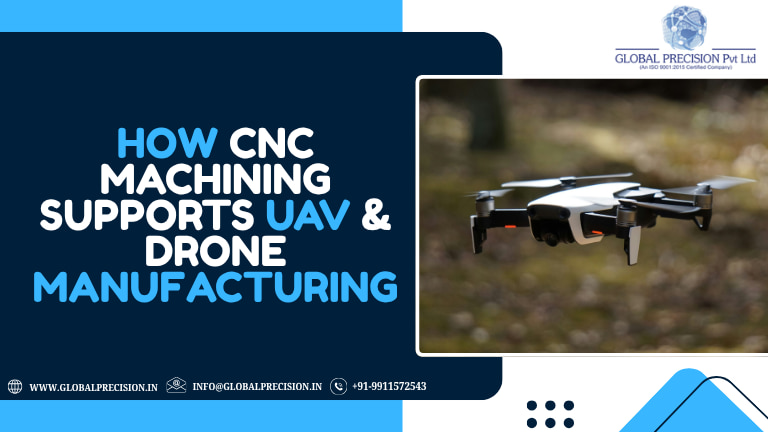

CNC machining supports UAV and drone manufacturing by providing the extreme accuracy, durability, and lightweight structural goodness needed for flight. It is the favored method of fabricating crucial parts, like motor mounts, camera gimbals, and structural frames, utilizing materials like aerospace-grade aluminum and carbon fiber.
The sky above us is changing. Just ten years ago, watching a drive buzzing overhead was a rare novelty. Nowadays, the world is seeing an unprecedented rise in the usage of Unmanned Aerial Vehicles and drones. From providing life-saving medical supplies to remote villages and supervising large-scale agricultural crops, to capturing breathtaking cinematic footage for Hollywood blockbusters, drones have become an integral part of advanced society.
Table of Contents
Drones are even being deployed for extremely specialized scientific and environmental missions. For example, particularly developed hybrid UAVs are now being utilized to detect the acoustic signatures of chainsaws in dense forests, permitting authorities to recognize and control illegal deforestation. But as we admire what these flying machines are capable of, we rarely pause to ask: How are these fantastic machines actually made? The secret of a successful drone is ultra-precise, lightweight, and extremely robust manufacturing. CNC machining is a perfect balance that the aerospace industry highly depends on.



What Exactly is CNC Machining?
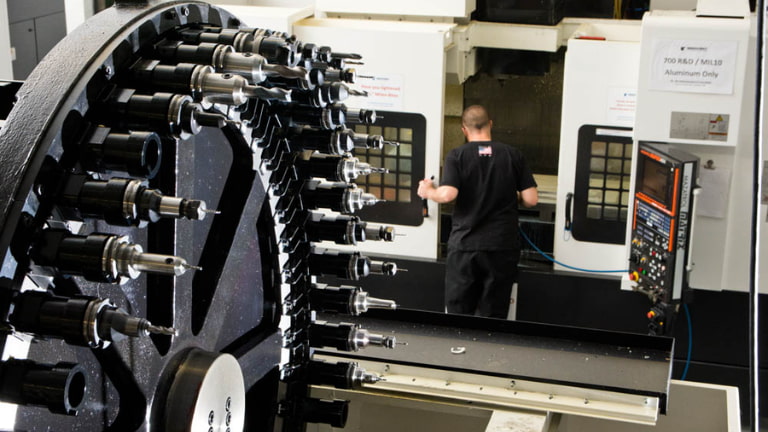
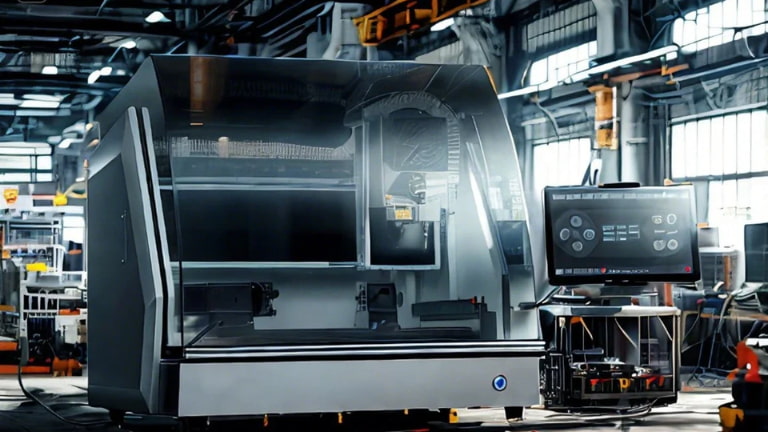
To comprehend how drones are made, we first have to comprehend the tools utilized to make them. CNC stands for Computer Numerical Control. CNC Machining is a subtractive manufacturing procedure.
Imagine a structure taking a strong block of marble and carefully chipping away the excess stone until a stunning statue is revealed. CNC machining does the actually same job, but rather than a statue with a chisel, it utilizes automated, computer-controlled cutting equipment to carve out a component from a strong block of metal or plastic.
The Shift – Conventional Machines vs. CNC Machines
Before the technical age, factories depended on Conventional machines like manual lathes and manual milling machines. These needed a proficient human operator to manually transform the wheels and dials to cut the material. While conventional machines are still effective for easy, one-off projects or common repairs, they just can’t maintain with the requirements of the advanced aerospace industry. Human hands, no matter how proficient, are prone to little mistakes, fatigue and inconsistencies.
This is where CNC machines thoroughly revolutionize the procedure. Because they are driven by extremely specific computer code. CNC machines can move with microscopic accuracy. They can run all day and night, generating hundreds or thousands of identical components without a single drop in quality. When you’re building a machine that requires to defy gravity, that level of precise, repeatable accuracy isn’t only a luxury, it is an absolute need.
Why Drones Demand Perfect Precision
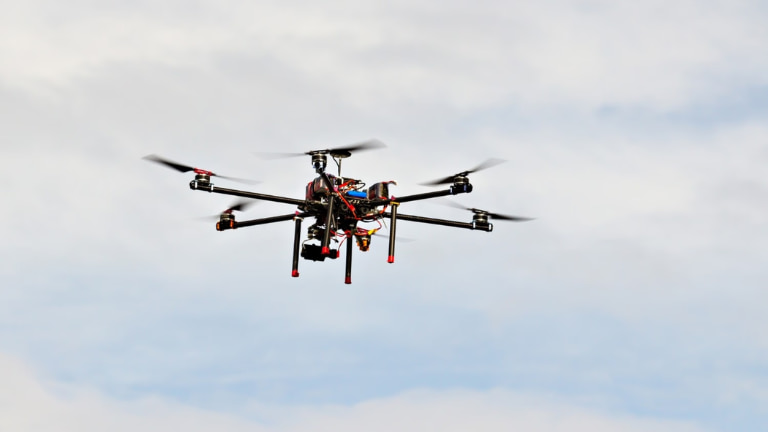
You might wonder why a drone needs such modern manufacturing in comparison to a regular household appliance. The answer comes down to three primary factors – aerodynamics, weight, and vibration.
1. Weight Optimization – Every single gram matters on a drone. The heavier the drone, the more battery power it consumes just to stay in the air. CNC machining permits engineers to carve out complicated, hollowed-out designs that eliminate unwanted material while sustaining the structural power of the part.
2. Perfect Balance – Propellers spin at extremely high speeds. If the motor mount or the spinning shaft is even a fraction of a millimeter off-center, the whole drone will vibrate violently. This destroys the camera footage, drains the battery quickly, and can even result in the drone falling out of the sky.
3. Durability – Drones face harsh conditions. They should withstand robust winds, sudden drops in temperature, and sometimes a rough landing. The components should be machined smoothly to make sure they don’t crack under pressure.
The Building Blocks – Key Drone Components
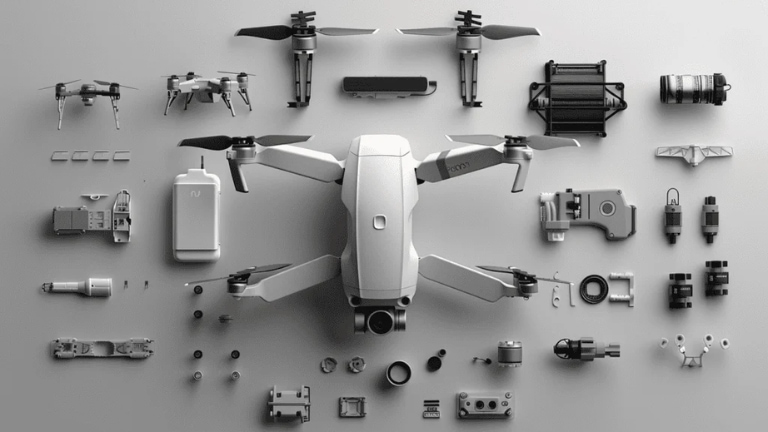
When we break a drone down into its physical components, we see that it is a masterpiece of assembled parts. These components typically fall into two primary classes depending on how they are machined.
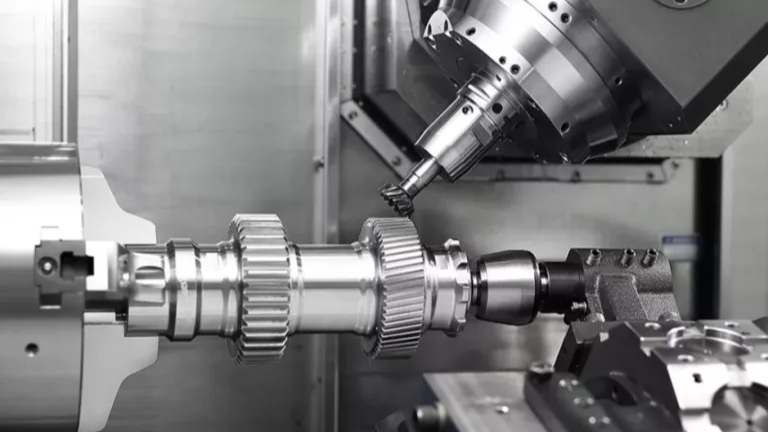
1. CNC Milling Components – Milling is a procedure where the cutting tool spins quickly and moves in a stationary block of material to carve out structures, slots, and holes. CNC milling components in a drone typically make the main skeletal framework. These comprise –
- The Main Frame or Chassis – This is the spine of the drone. It possesses the battery, the flight controller, and the wiring.
- Motor Mounts – The parts that link the strong spinning motors to the arms of the drone. These should be milled to precise specifications so the motors sit ideally flat.
- Camera Gimbals – If you have ever witnessed seamless drone video footage, you have a gimbal to thank. The gimbal possesses the camera speedily while the drone tilts and turns. The brackets that make up the gimbal are almost always CNC milled out of lightweight aluminum.
2. CNC Turned Components – Turning is a distinct procedure where the material itself spins quickly on a lathe, and a stationary cutting tool presses against it to shave off layers. This is ideal for making cylindrical or round components. CNC turning components in a UAV comprise –
- Propeller Shafts – The metal rods that connect the motor to the plastic propeller blades.
- Spacers and Standoffs – Small, threaded metal tubes that maintain the electronic circuit boards protectively separated from one another inside the drone body.
- Landing Gear Struts – The difficult, cylindrical legs that absorb the effect when the drone touches the ground.
Material Selection – What are Drones Made Of?
The elegance of CNC machining is its versatility; it can cut through a broad range of materials. For drone manufacturing, the option of material is extremely strategic –
1. Aluminum – This is the undisputed king of drone materials. It is extremely affordable, highly simple to machine, resists corrosion, and fosters an amazing strength-to-weight ratio.
2. Titanium – For military-grade UAVs or high-end industrial drones that hold hefty payloads, titanium is utilized.
3. Engineering Plastics – Usually utilized for safe enclosures and electronic housings because they are lightweight and don’t interfere with the radio signals sent between the drone and the pilot’s remote control.
Why CNC Excels Over 3D Printing
With all the hype around 3D printing, one might ask why we do not only 3D print whole drones. While 3D printing is an amazingly effective tool for quick prototyping, it has restrictions when talking about final production. Analysis presents that while additive manufacturing is effective for experimenting with polymeric drone structures, gaining the crucial structural goodness for complicated, load-bearing components is extremely difficult or almost impossible without depending on conventional ways like injection molding or CNC machining.
Components that are 3D printed are made layer-by-layer, which means they can effortlessly snap along those coating lines under high stress. CNC machined components, carved from a single, strong part of extruded or cast metal, deliver extremely amazing strength and durability.
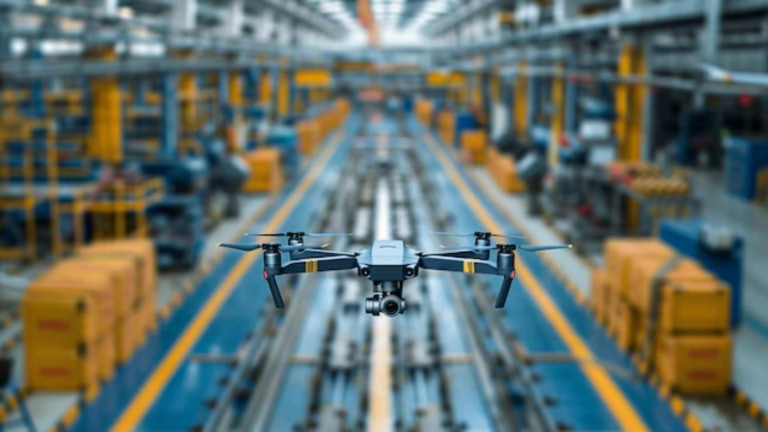
What’s interesting here is that the connection between drones and the manufacturing sector is a two-way street. Drones are not just being built by the manufacturing industry, but also are increasingly being used inside today’s factories to help with inventory counting, moving small materials around, and doing visual verifications of industrial machinery.
The Importance of Choosing the Right Manufacturing Partner

Because the tolerances in UAV manufacturing are so tight, drone corporations can’t afford to work with subpar machine shops. The success of a drone brand depends on the abilities of its CNC components manufacturer.
When drone developers seek CNC machined components manufacturers, they look for facilities that hold cutting-edge multi-axis CNC mills, stringent quality control departments, and developers who comprehend the remarkable needs of the aerospace industry.
This is where industry experts like Global Precision Pvt Ltd move into the spotlight. A major manufacturing partner does more than only blindly follow a blueprint. They work as advisors. A professional manufacturer like Global Precision will research a drone component development and suggest little changes that might take the part lighter, stronger, or quicker to generate, eventually saving the drone company time and money while yielding an excellent flying machine.
Conclusion
One of the most exciting technological leaps of the 21st century has been the development of Unmanned Aerial Vehicles. With drones becoming part of our everyday lives, delivering our parcels, monitoring our forests, and inspecting our infrastructure, the need for good, reliable components will only grow.
While software and advanced batteries grab much of the public’s attention, the manufacturing floor is the real unsung hero of the drone revolution. Today’s CNC technologies provide fast, hyper-accurate, and cost-effective manufacturing, enabling traditional machinery to be replaced in the manufacture of UAVs that fly higher, last longer, and carry more. From the smallest CNC turned fasteners to the largest CNC milled chassis, precision machining keeps the future of flight safe, stable, and really bright.