
The best metal for CNC machining depends on your particular needs for strength, weight, corrosion resistance, and affordability. CNC machines cut and structure different metals to make high-precision components. Exploring the properties of industry favorites will assist in matching the appropriate metal to your particular application.
When it comes to manufacturing top-quality metal components, selecting the appropriate material is one of the most crucial decisions a business can make. The material you choose determines how robust the component will be, how well it operates with electricity or heat, how much it weighs, and how much it will cost to produce.
Table of Contents
In advanced manufacturing, CNC machining has thoroughly revolutionized how we structure these metals. By utilizing computer-guided cutting tools, fabricators can take raw metal blocks and turn them into extremely complicated structures with sub-millimeter precision. Let’s find out the crucially best metals utilized in precision manufacturing today, how computer-controlled systems compare to older ways, and how an industry-leading CNC components manufacturer can assist your business in bringing its designs to life.



The Technological Leap – CNC Machines vs. Conventional Machines
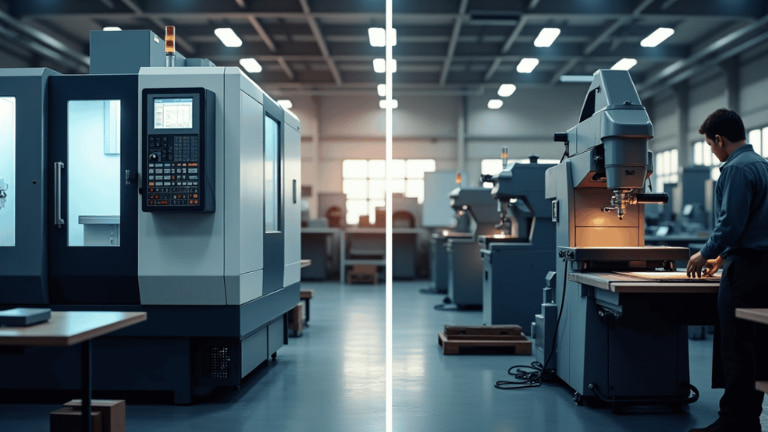
To comprehend why material options matter so much today, it assists in looking at how much production technology has grown.
1. Conventional Machines – Conventional manufacturing is dependent on manually operated tools like manual lathes, hand-turned drills, and physical shaping tools. While proficient machinists could generate good components, the procedure was slow, prone to human mistakes, and struggled with complicated, multi-angled geometries.
2. CNC Machines – Advanced production environments utilize automated CNC machines. These systems read a 3D digital blueprint and utilize accurate computer programming to control the automated tools.
Because computer automation removes human fatigue and manual tool adjustments, it permits factories to cut hard metals instantly with extreme repeatability, operating 24 hours a day with zero variance between the first part and the ten-thousandth part.
Top Metals Used in Precision CNC Machining
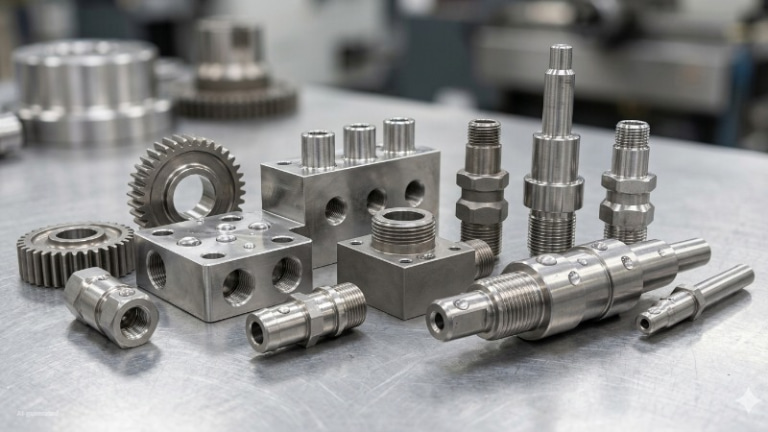
Various industries demand various metal features. Here is a breakdown of the most trusted and broadly utilized metals in precision engineering workshops.
1. Aluminum (6061 and 7025 grades) – Aluminum is definitely the most famous metal for regular computer-guided milling. It is lightweight, delivers superior corrosion resistance, and is extremely machinable, meaning cutting tools can slice through it rapidly without wearing out.
- Aluminum 6061 – A superior, general-purpose alloy featuring good weldability and structural properties.
- Aluminum 7075 – A high-strength variant alloyed with zinc. It fosters a tensile power comparable to some steels, making it a favorite for aerospace frameworks.
2. Stainless Steel (304 and 316 Grades) – When your components require withstanding harsh, corrosive atmospheres or intense mechanical stress, stainless steel is the gold standard.
- Stainless Steel 304 – Delivers excellent formability and rust resistance for commercial applications.
- Stainless Steel 316 – Contains molybdenum, making it extremely resistant to salt water, marine environments, and harsh industrial chemicals.
3. Brass (C360 Grade) – Brass is extremely valued for its golden aesthetic, excellent electrical conductivity, and low-friction coefficient. It is one of the simplest metals to cut, permitting production lines to run at extremely high speeds.
4. Titanium (Grade 5/Ti-6AI-4V) – Titanium is a main metal celebrated for its superior strength-to-weight ratio. It is as robust as steel but roughly 45% lighter. It is also thoroughly biocompatible, meaning the human body will not reject it. However, because it is extremely difficult and operates poorly with heat, it demands specialized multi-axis tooling and professional programming to machine appropriately without harming tools.
Comparing CNC Milling vs. CNC Turning Components
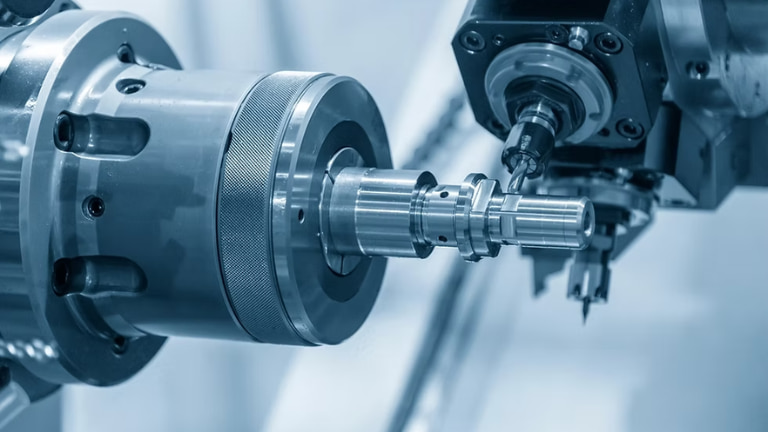
Depending on the final structure of your component, the raw metal will be sent down one of two main production ways –
1. CNC Milling Components – In a milling formation, the metal block remains clamped in a stationary vise while sharp, multi-axis cutting equipment spins at thousands of revolutions per minute, cutting across X, Y, and Z axes to carve away material. This procedure is perfect for making angular structures, flat surfaces, gear teeth, internal slots, and intricate protective enclosures.
2. CNC Turned Components – In a turning formation, the workflow is reversed. The raw metal rod is gripped by a chuck and spun at high speeds while a stationary, ultra-hard cutting tool is pressed against it to peel away layers. This procedure is optimized for making ideally symmetrical, cylindrical structures like custom pins, threaded fasteners, drive shafts, and accurate connectors.
Choosing an Enterprise CNC Components Manufacturer
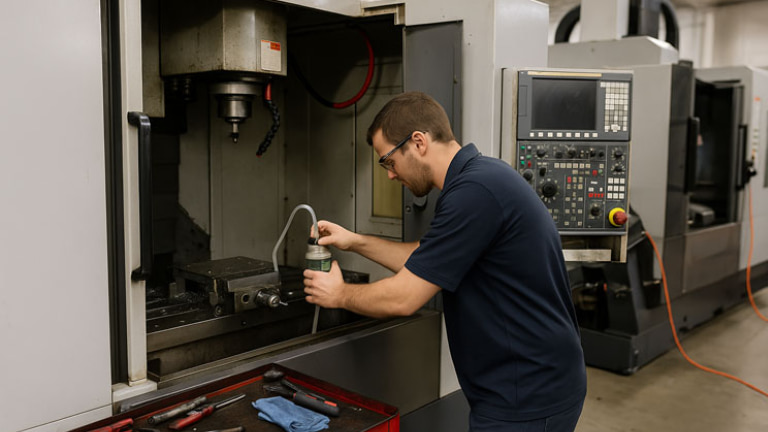
Utilizing premium metals is only half the battle; you also require a production partner capable of working within extremely tight mechanical tolerances. For companies seeking to scale their production with top-class precision, Global Precision Pvt Ltd stands out as an extremely reliable, ISO 9001:2015 certified production partner.
Established in 2011, Global Precision Pvt Ltd runs a cutting-edge facility furnished with modern 3-axis and 4-axis Hurco Vertical Machining Centers alongside high-speed turning lines. Their manufacturing group utilizes modern SolidCAM programming software to gain quick prototyping and smooth high-volume production, securely sustaining tight functional tolerances down to ±0.010 mm.
As one of the leading CNC machined components manufacturers, they hold broad material specialization in a vast range of difficult metals, including Stainless Steel, Titanium, Aerospace-grade Aluminum, Brass, and specialized Tool Steels. Whether your corporation needs a one-off prototype for a medical implant or thousands of complicated components for automotive assembly lines, collaborating with a vetted, single-source manufacturer makes sure thorough quality control from initial blueprint to final metrology verification.
Conclusion
Selecting the ideal metal for your custom components demands balancing material strength, structural weight, environmental exposure, and overall manufacturing expenses. By transitioning away from manually operated tools and taking advantage of modern computer-guided milling and turning, your company can have unparalleled design freedom, minimal material waste, and smooth part consistency.
Making an investment in top-tier engineering talent and selecting a trusted, internationally certified partner such as Global Precision Pvt Ltd will make sure your crucial parts constantly withstand the difficulties of hefty industrial applications.