

To purchase a CNC machine, make sure to align your production demands with the machine’s capabilities. The key factors include part complexity, materials, footprint, and software compatibility. Evaluating Total Cost of Ownership (TCO) is also necessary, which includes tooling, maintenance, and power.
In India, precision manufacturing demands the right machinery. CNC machines, in this regard, provide high precision with automatic handling. Whether you operate in the sectors of automotive, aerospace, or medical devices, having a detailed CNC machine buying checklist for manufacturers is mandatory to make an informed buying decision. This list ensures that you buy a machine aligning with the manufacturing needs, capacity, software compatibility, and related important factors.
Table of Contents
What is a CNC Machine?
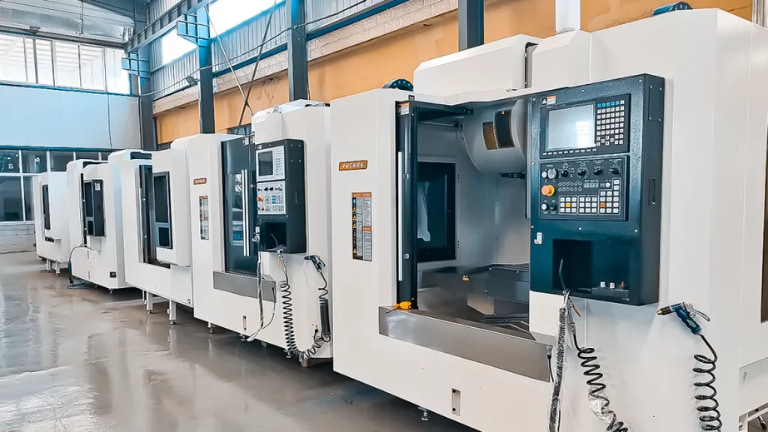
A CNC machine is an automated manufacturing tool that is controlled by a computer, rather than operated manually. It is a precision industrial equipment that precisely cuts, shapes, or carves materials, like wood, metal, and plastic. The scope of use of a CNC machine for metal includes stainless steel, aluminum, brass, copper, and carbon steel.



This CNC computerized machine is a revolutionary step beyond conventional machines, where companies used manual labor. In that process, a technician used to control the tools and workpieces using handwheels, levers, and dials.
Types of parts that are manufactured using CNC machining:
| Feature | CNC Milling Components | CNC Turned Components |
| Material Action | Fixed workpiece and rotating cutting tool | Rotating workpiece and stationary tool |
| Ideal Geometry | Complex, prismatic, and irregular shapes | Cylindrical, round, and symmetrical shapes |
| Common Parts | Brackets, engine blocks, manifolds, and enclosures | Shafts, pins, bushings, fasteners, and spacers |
| Machines Used | Vertical and Horizontal Machining Centers (VMC and HMC) | CNC Lathes and Turn-Mill centers |
| Axis Capability | 3 to over 5 axes (X, Y, Z, A, and B) | 2 to 4 axes (X, Z, optional Y and A) |
How Does a CNC Machine Work?
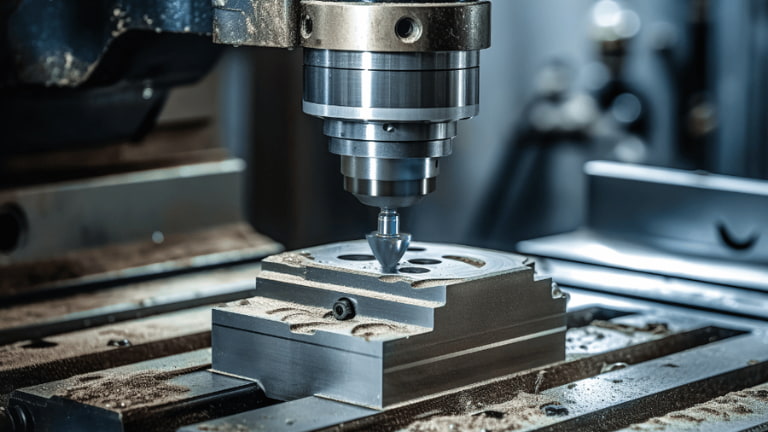
CNC machines work by following three steps, that includes:
1. Design (CAD): A 2D or 3D digital model is created using Computer-Aided Design (CAD).
2. Programming (CAM): In this step, the model is fed to the Computer-Aided Manufacturing (CAM) software. This software converts the visual design into G-code, which helps in building desired components in the CNC machining process.
3. Execution: In the last step, the code is transferred to the machine. Inside it, the integrated CNC controller interprets the G-code and commands the motors and rails to start cutting, controls tool changes, and movement as per the design.
CNC Machine Buying Checklist for Manufacturers
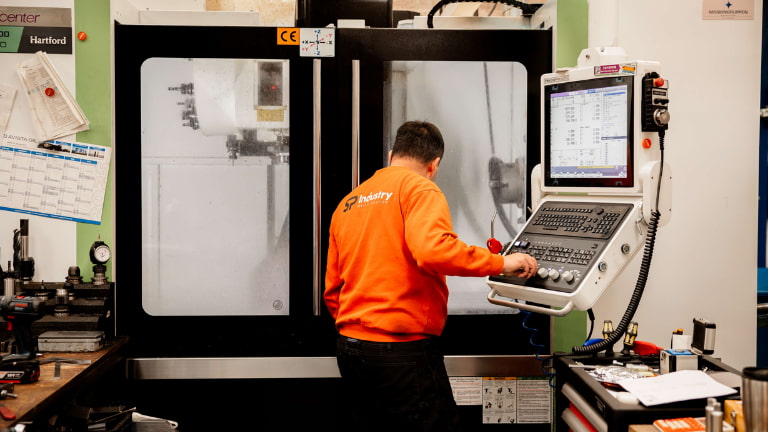
Before you buy a CNC machine for your manufacturing needs, make sure it fits your projects and budget and uses your workspace efficiently. By considering these factors, you can align machine capabilities to material requirements and production volume.
Here, we discuss some of the CNC machine buying checklist for manufacturers you must keep in mind:
1. Technical and Performance Requirements
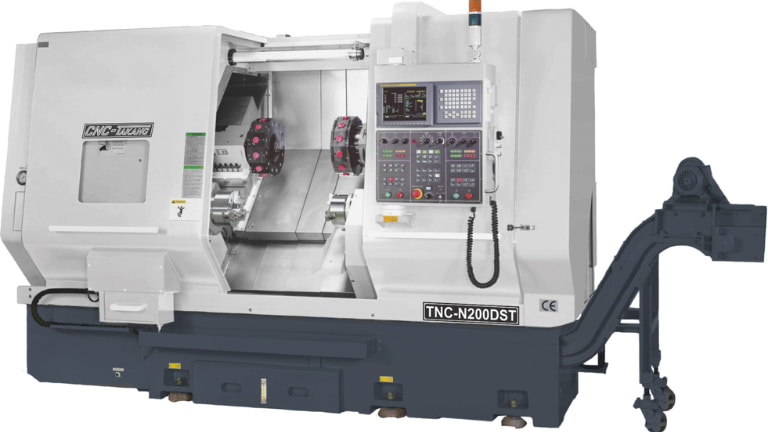
- Axis Configuration: Determine what axes suit your operational needs, linear or rotational. Based on this, decide what setup level will be suitable: 3-axis, 4-axis, or 5-axis, as per the complexity of the geometries.
- Spindle Specifications: Verify the speed, torque, power, and taper type of the spindle against the materials you will use, like hardened steel, titanium, aluminum, etc.
- Tooling Capacity: Check the changer capacity (ATC) and type of tool holders, like BT, CAT, or HSK, to ensure that it aligns with the production capacity.
2. Software and Automation

- CAD and CAM Compatibility: The CNC machine should be compatible with the CAD and CAM software that your company uses in production. Whether Mastercam, Fusion 360, or SolidWorks, it’s essential to match compatibility to start manufacturing.
- Automation Ready: Check whether the machine supports automated control systems, like robotic part loaders, bar feeders, or pallet changers. They provide enhanced safety and increase production efficiency.
- Safety Features and User Interface: Ensure the machine has smart safety features such as emergency stop and safety guards. Another factor which is to mind is a user-friendly interface to help the technician understand and operate the machine smoothly.
3. Facility and Infrastructure
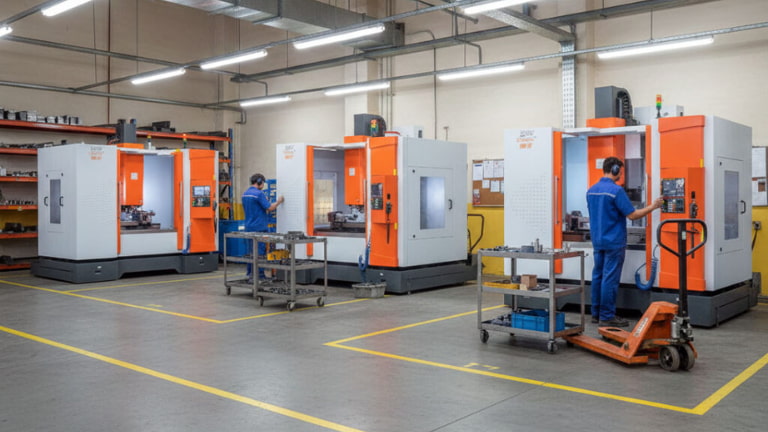
- Physical Space and Clearance: Ensure that the machine fits into your designated workspace. Look for its dimensions that will require space, helping you make an efficient pre-installation plan. In addition, clearance for maintenance, door swings, and chip evacuation is required.
- Power Needs and Air Supply: Evaluate the phase requirements of the machine, voltage, and amperage compatibility, and compressed air pressure with your facility’s electrical infrastructure. This also ensures the longer lifespan of sensitive electrical components of the machine.
- Weight and Foundation: CNC machines are heavy-duty, industrial-grade equipment. They require a strong, rigid, and stable base for efficient vibration dampening during operations. Therefore, make sure that it has a solid concrete base.
4. Total Cost of Ownership (TCO)

- Capital and ROI: Buy from a reputed CNC machine provider, like Global Precision Pvt Ltd, to secure a value-for-money deal, ensuring long-term usability with high efficiency.
- Tooling and Fixtures: You must consider the hidden costs that come with the CNC machine, like specialized tool holders and cutting tools.
- Maintenance and Consumables: CNC machined components manufacturers provide extensive spare part replacement, lubricants for smooth operation, and coolant to protect the machine’s life.
5. Comprehensive Manufacturer Support
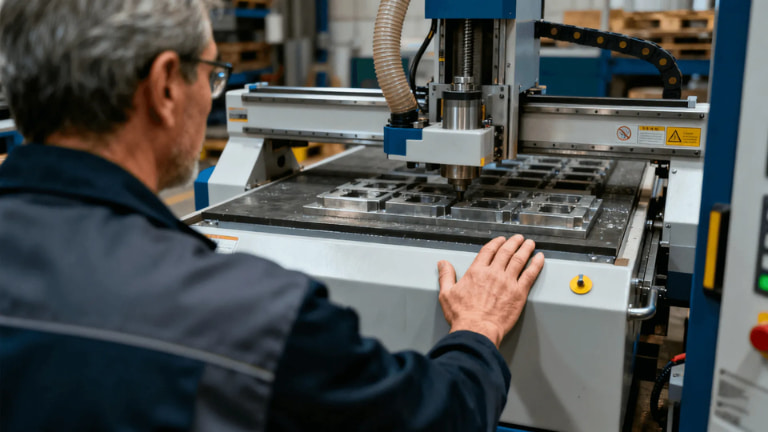
- After-Sales Support: Evaluate the availability of the CNC component manufacturer, response time, local technicians, and spare parts.
- Training: Include the cost of the OEM (Original Equipment Manufacturer) in the overall training of your technicians and programmers.
- Warranties: Ask for warranty coverage and see if there is any extended plans are available from the side of the provider.
CNC Machine Price in India
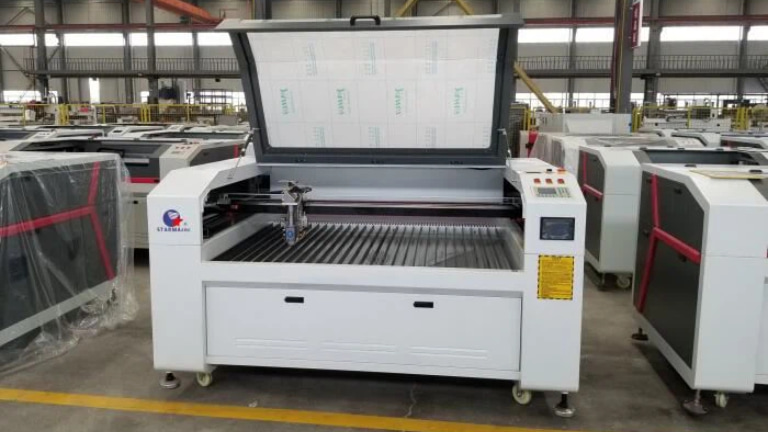
Below is a table breaking down the CNC Machine Price in India, based on the application and capabilities:
| Category | Price Range | Fow Whom | Capabilities | Example Models |
| Hobbyist & Desktop CNC Machines | ₹20,000 to ₹1,00,000 | Beginners, DIY enthusiasts, makers, educational setups | Usually 3-axis desktop routers and engravers; suitable for plywood, acrylic, PVC, and soft aluminum | TwoTrees TTC450 Pro, TwoTrees TTC 3018 Pro |
| Light Industrial & Commercial CNC Routers | ₹1.5 Lakh to ₹10 Lakh | Small to medium woodworking, sign-making, and furniture businesses | Typically 4′ × 8′ (1325 mm) bed size; designed for continuous cutting of MDF, hardwoods, soft metals, and plastics | Various commercial CNC router models |
| Heavy Industrial & Metalworking CNC Machines | ₹10 Lakh to over ₹1 Crore | Medium to large-scale manufacturing, aerospace, automotive, and die and mold industries | High-precision VMCs, CNC lathes, and 5-axis machines; advanced controllers and automatic tool changers | Brands such as Ace Micromatic, BFW, and LMW |
Conclusion
A CNC machine is high-precision equipment. To get the right one, consider a thorough CNC machine buying checklist for manufacturers to understand technical requirements and more, and secure comprehensive manufacturer support like maintenance, after-sales client support, and warranties.
To secure the best client support and a high-quality CNC machine, contact Global Precision Pvt Ltd. We are a reputable CNC machine provider with an ISO 9000:2015 certification. Manufacturers across the aerospace, defence, medical, electronics, and automobile industries can trust us, as we assure superior quality CNC machines in India.