
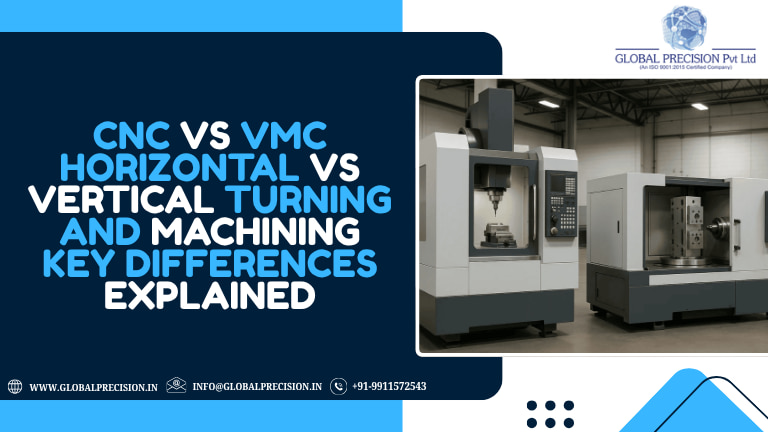

CNC is the wide, overarching technology that automates machine equipment. A VMC is a particular subset of CNC machines where the spindle is vertically focused. The selection between vertical or horizontal configurations dictates production pace, establishes complication, and perfects part size.
In a world of advanced precision engineering, terms like CNC and VMC are utilized continuously. If you walk onto a manufacturing facility floor, you will hear specialists talking about turning hubs, milling formations, and multi-axis job work. However, if you’re new to manufacturing, or trying to source parts for an engineering project, the terminology project, the terminology can effortlessly become complicated.
Table of Contents
Are CNC and VMC thoroughly distinct machines? What is the distinction between horizontal and vertical turning? Comprehending these technologies is crucial to selecting the appropriate production way for your components.



Choosing the appropriate machine architecture directly affects the price, production pace, and quality of your components. Working with a primary CNC components manufacturer makes sure that your parts are routed through the perfect machinery, reducing manufacturing fees while hitting stringent tolerances.
Clearing Up the Confusion – CNC vs. VMC
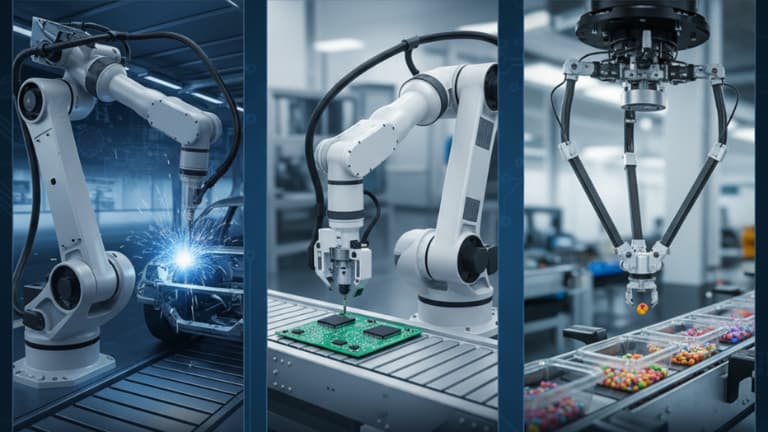
To know the main differences, we need to clear up a very typical misconception: CNC and VMC aren’t opposing technologies. In fact, one is just a category inside the other.
What is CNC?
CNC stands for Computer Numerical Control. It isn’t a particular kind of machine; instead, it is the highlighting technology. Any industrial machine that utilizes a computerized program to automatically control the movement of equipment is a CNC machine. This wide umbrella comprises –
- CNC Lathes
- CNC Plasma Cutters
- CNC Grinders
- CNC Milling Machines
What is a VMC?
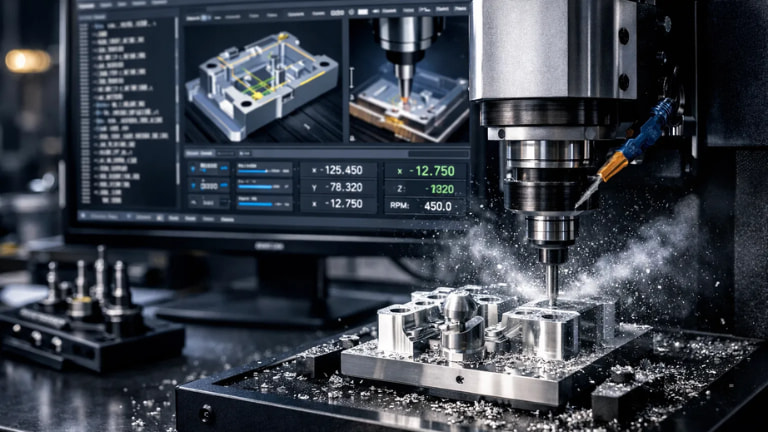
VMC stands for vertical machining center. A VMC is an extremely specialized kind of CNC machine. It particularly refers to a computer-controlled milling machine where the spindle-the rotating shaft that possesses the cutting tool, is focused vertically, pointing straight down toward the machine bed.
The main relationships – All VMCs are CNC machines, but not all CNC machines are VMCs. CNC describes the computer brain and control system, while VMC defines the physical plan and structure of a vertical milling machine.
Machining Dynamics – Turning vs. Milling
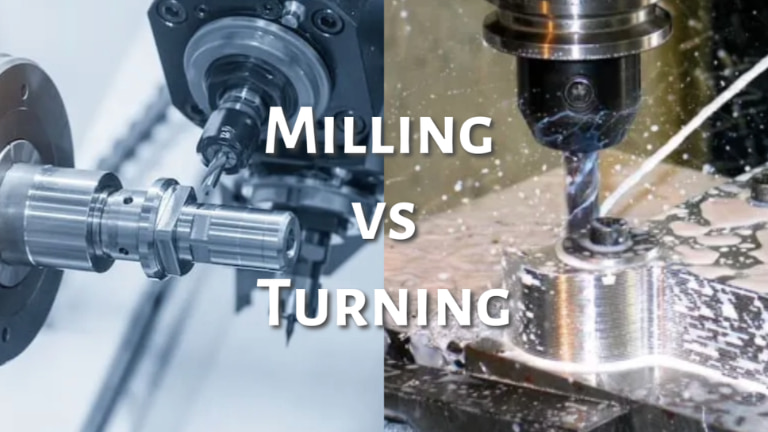
Before looking at axis focus, it is useful to look at how material is actually eliminated. Computerized engineering divides metal cutting into two main classifications – Turning and Milling.
1. CNC Turning
At a turning point, the raw metal bar stock is hung in a chuck and spun at high speeds. A stationary cutting tool is pressed against the spinning metal to slice away material. This procedure makes cylindrical, round parts. The products generated here are renowned as CNC turned components, which comprise objects like bolts, pins, shafts, and custom step-pulleys.
2. CNC Milling
Milling flips the functional logic thoroughly. In a milling machine or VMC, the raw block of metal stays clamped flat onto a stationary table. The cutting tools is the part that spins at thousands of revolutions per minute, moving in the X, Y, Z axes to carve out complicated pockets, holes, slots, and flat faces. The components prepared in this way are called CNC milling components, typically in brackets, engine housings, blocks, and molds.
Horizontal vs. Vertical Orientations
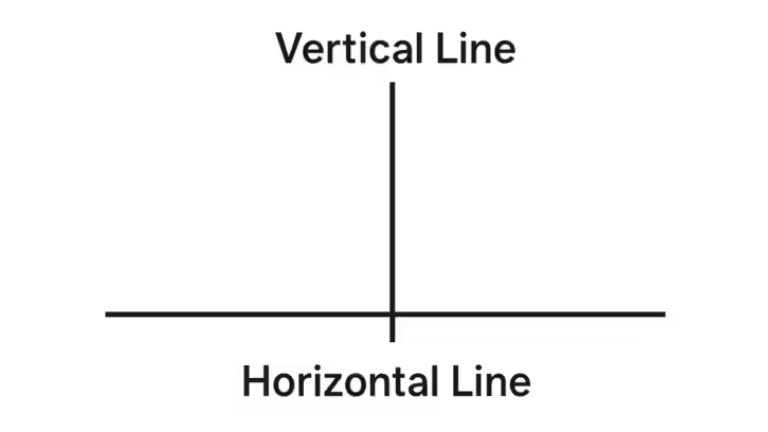
Once you comprehend turning and milling, the next big option is the physical orientation of the machine’s spindle – Horizontal vs. Vertical. How you select to position the tool related to gravity modifications everything about how a part is manufactured.
1. Vertical Configurations
In a vertical configuration, the tools attack the part from above. For milling, a VMC machined components manufacturer utilizes a vertical formation because it delivers outstanding visibility. The machinist can effortlessly peer through the glass window to watch the tool cut the material.
For turning big parts, vertical lathes place the heavy part flat on a huge rotating carousel table. This permits gravity to assist in holding the huge part protective in place, controlling heavy parts from deflecting or drooping out of balance.
2. Horizontal Configurations
In a horizontal configuration, the spindle faces sideways, matched to the shop floor. In horizontal turning centers, long components like drive shafts are held horizontally between a chuck and a tailstock.
For milling, a Horizontal Machining Center excels at high-volume mass manufacturing. Because the spindle cuts from the side, the metal chips and shavings fall straight down into a conveyor system by force of gravity, instead of accumulating inside pockets like they usually do on a VMC table.
Feature Breakdown – Comparing Your Options
Choosing the appropriate machinery configuration depends on part geometry, material weight, and targeted production volumes. To assist in mapping these variables, this table highlights the practical distinctions in typical machining formations –
| Manufacturing System | Primary Application | Best Part Geometry | Key Strength |
| CNC Turning (Horizontal Lathe) | Rotational carving | Long shafts, pins, cylinders | Rapid, high-volume symmetrical execution |
| VMC (Vertical Machining Center) | Prismatic cutting | Flat plates, blocks, complex dies | Exceptional visibility, simple setup, lower tooling cost |
| HMC (Horizontal Machining) | Multi-faced milling | Large gearbox cases, heavy housings | Superior chip clearing, continuous multi-sided cutting |
| Vertical Turning Center (VTL) | Heavy-duty turning | Massive rings, large diameters | Gravity-assisted workholding prevents part distortion |
Unlocking Complexity – 4th Axis VMC Machining
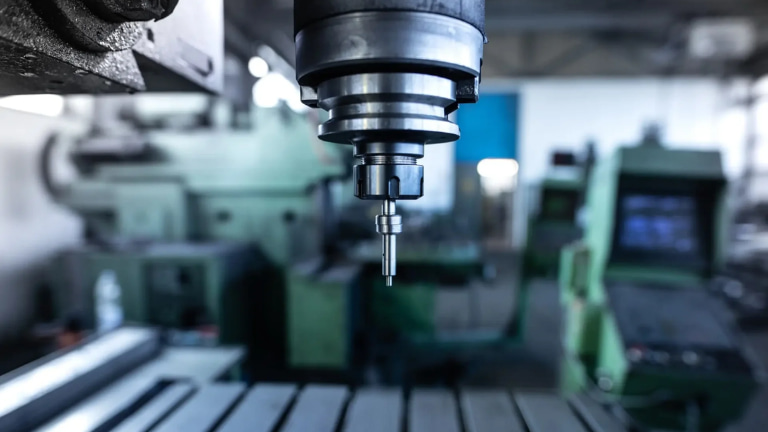
Common VMCs function on 3 linear axes: the X axis, the Y-axis, and the Z-axis. While this works elegantly for flat components, machining an intricate structure that needs features on several sides means the operator has to manually prevent the machine, unclamp the part, rotate it, and clamp it back down. This manual procedure takes additional time and presents the potential for human mistakes.
To solve this problem, modern workshops introduce 4 axis VMC job work. By enhancing a programmable rotary indexer onto the common VMC table, the workpiece can rotate automatically while the tool cuts.
Using 4th Axis VMC machining components lets a manufacturer engrave text around a cylinder, cut spiral helical gears, or machine several sides of a bracket in a single automatic formation. This drastically enhances part precision because the element never loses its initial fixture clamping.
Sourcing Precision in Modern Manufacturing Hubs
When industrial companies look to source high-volume components, they seek trusted hubs with a dense network of suppliers. In India, the industrial industries around the National Capital Region have developed into leading manufacturing hubs.
Engineering companies regularly look for the top VMC machine job work in Delhi to manage high-precision contract manufacturing. These regional hubs have expertise in raw blueprints and casting blanks, and converting them into finished, assembly-ready components.
However, for international supply chains demanding huge volume scales, global aerospace tolerances, and end-to-end material certification, functions move toward institutional suppliers. Incorporated engineering leaders, like Global Precision Pvt Ltd, merge broad capabilities under one roof. By running fleets of both CNC turning hubs and multi-axis VMC machinery, a single CNC machined components manufacturers ecosystem can handle both turned pins and milled housings simultaneously, making sure ideal fits during final assembly.
Buyers Guide – Choosing the Right Setup for Your Parts
If you are developing an engineering part and have to determine whether to source it from a VMC components manufacturer or a specialized CNC turning vendor, utilize this fast checklist –
When to route your components to a CNC Turning center –
- The component is thoroughly round, symmetrical, or cylindrical.
- You require high-volume results of components, like custom fasteners, fittings, axles, or bushings.
- The design demands accurate external threads or seamless tapers along a length or round stock.
When to route your components to a VMC –
- The part is rectangular, square, or an irregular, asymmetrical structure.
- Your design features profound internal pockets, face cavities, slots, or flat 2D profiling paths.
- You are making tool room prototypes, complicated molds, or dies that need fine, thorough engraving.
- You need multi-axis processing, where adding 4th-axis rotation permits you to machine complicated contours without manual part adjustments.
Conclusion
There is no single best machine in advanced manufacturing. The selection between common CNC turning corners and vertical machining centers comes down to matching component geometry to the structural design of the machine tool.
Whether your production operation needs quick CNC turned components generated on a horizontal lathe, or complicated geometric brackets fabricated through 4th axis VMC machining components, the key to project success lies in the vendor’s ability.
By connecting with a modern, thoroughly furnished VMC machined components manufacturer like Global Precision Pvt Ltd, you make sure your industrial designs are translated into physical products with tight tolerances, quick turnarounds, and optimized manufacturing expenses.