

VMC 4-axis machining redefines accuracy by adding a rotational axis to conventional X, Y, Z movements, verifying multi-sided machining in a single formation. This boosts precision, improves surface finishes, and remarkably decreases setup times, making it perfect for complicated geometries, aerospace elements, and medical gadgets.
In the high-stakes world of advanced manufacturing, accuracy is no longer only a luxury; it is the baseline for success. As sectors like Aerospace, medical technology, and automotive engineering push the borders of what is possible, the machinery utilized to make their parts should keep up.
Table of Contents
One of the most remarkable leaps in this sector is the move from conventional 3-axis milling to VMC 4-Axis machining. This technology has redefined how complicated elements are made, delivering a level of precision and effectiveness that was previously impossible.



What is VMC 4-Axis Machining?
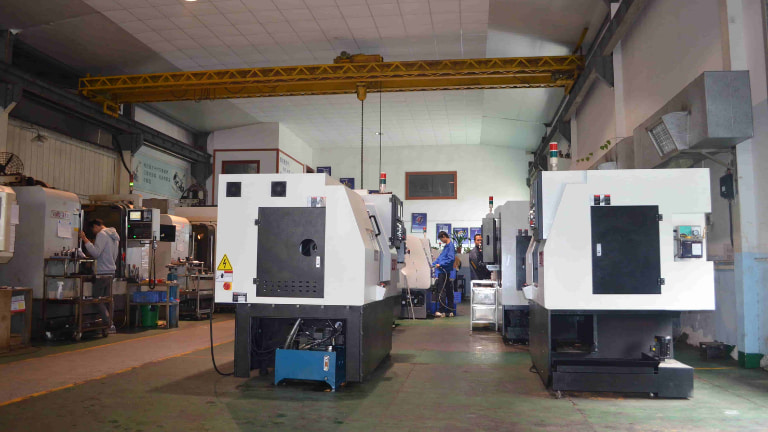
To comprehend the 4th axis, we first have to look at the basics. A common Vertical Machining Center typically runs on three axes –
- X-Axis – Left to Right Movement
- Y-Axis – Front to back movement
- Z-Axis – Up and Down movement.
4th Axis VMC machining adds an additional rotation around the X-axis, usually called the A-axis. Consider it like a rotisserie; the part can spin while the cutting tool moves. This permits the machine to reach several sides of a part without a human having to stop the machine and transform the part over by hand.
VMC 4-Axis Machining Advantages – Why It’s a Game Changer
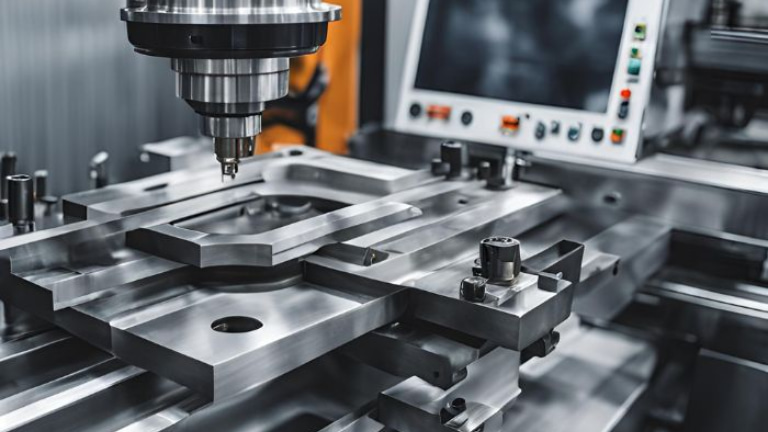
The transition from common 3-axis milling to 4-axis ability represents a change from easy flat machining to real multi-dimensional engineering. Here is a thorough look at the core VMC 4-Axis machining advantages and why they are crucial for advanced high-precision industries.
1. Minimal Human Intervention for Maximum Accuracy
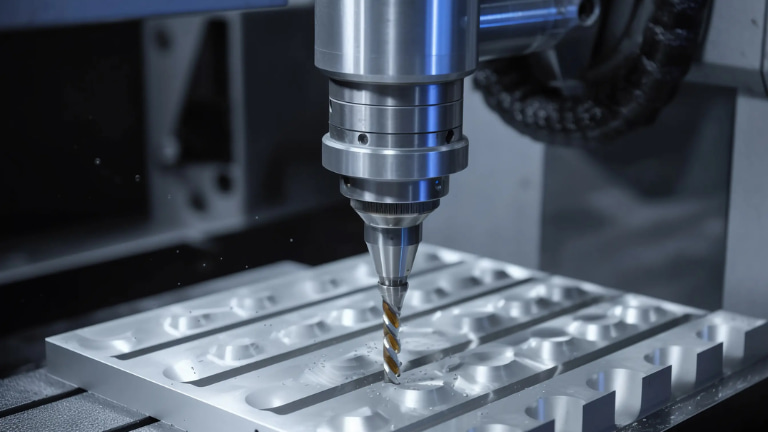
In conventional 3-axis machining, complication is the enemy of accuracy. If an element demands features on several faces, the operator should prevent the machine, unclamp the workpiece, rotate it manually, and reclamp it. This is renowned as a re-setup.
- Eliminating Cumulative Error – Every time a human feels a component to reposition, small alignment mistakes. Over four or five formations, these mistakes accumulate, resulting in a part that may not fit its final stage.
- The One-Stop Advantage – With 4th Axis VMC machining, the component is clamped once. The rotary table then positions the workpiece with mathematical perfection. By removing manual management, a VMC machined components manufacturer can sustain tolerances within microns across every single face.
2. Engineering Complexity Without Limits
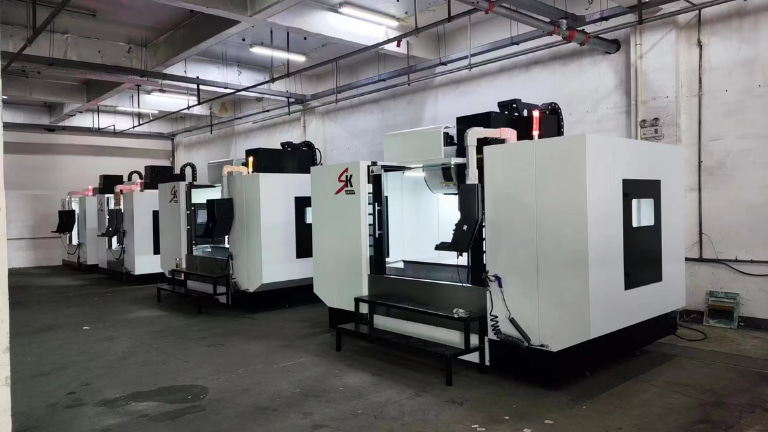
Conventional machines are usually restricted to top-down functions. If a design demands an angled hole or a side-contoured groove, a 3-axis machine struggles or fails.
- Multi-Angle Access – The addition of the rotational A-axis permits the cutting tool to system the material from virtually any angle. This is the game-changer for components with curved geometries or non-standard angles.
- Essential for Specialized Sectors – This ability is a stringent need for high-tech elements like Helical Gears & Cams, Aerospace Turbine Blades, and Medical Implants.
3. Drastic Reduction in Production Lead Times
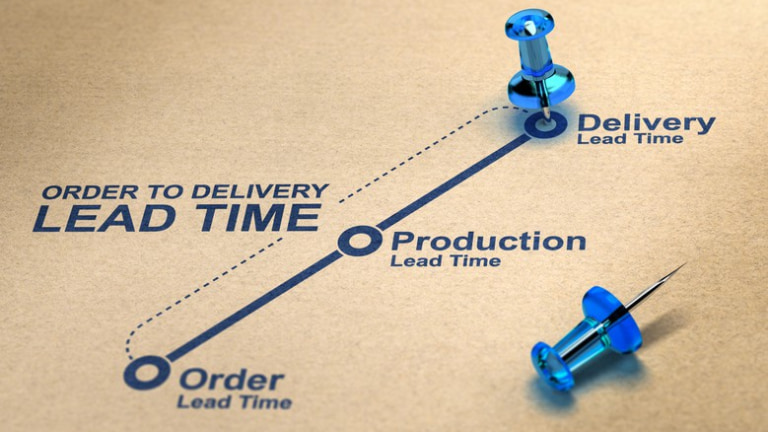
A typical misconception is that modern technology takes longer to program and run. In reality, 4 Axis VMC job work is remarkably quicker than conventional ways when looking at the overall production cycle.
- Total Cycle Time vs. Machining Time – While the actual cutting might take the same time, a 3-axis job might spend hours sitting idle while an operator establishes the next orientation. A 4-axis machine moves immediately from one face to the next.
- Lower Total Cost Per Part – While the hourly machine rate for a 4-axis VMC is generally higher, the dramatic reduction in labor hours and the elimination of costly custom jigs/fixtures typically lead to a lower final cost for the client.
4. Superior Surface Integrity and Aesthetics
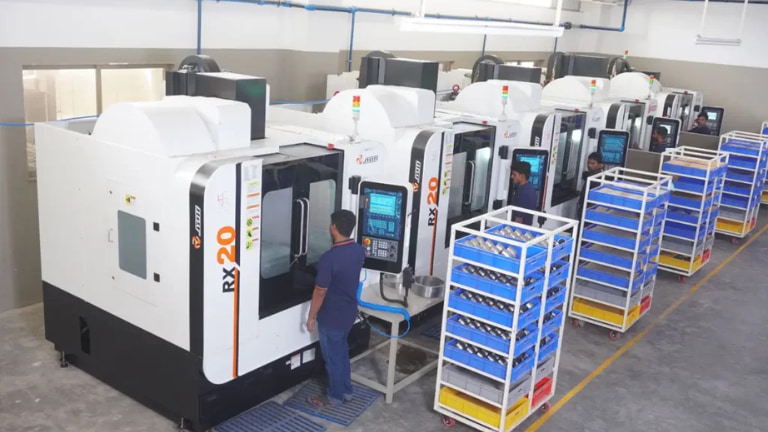
The quality of a finished part is not only about its dimensions; it is about the feel and smoothness of the surface.
- Consistent Angle of Attack – In 3-axis milling, the tool usually has to step down to make curves, leaving small ridges. In 4th Axis VMC machining, the component can rotate while the tool moves. This permits the tool to sustain a continuous, optimal contact point with the material.
- Reduced Post-Processing – This synchronized movement produces a finish so seamless that it usually removes the requirement for manual grinding, sandblasting, or polishing. For a VMC components manufacturer, this means shipping components quicker and with an expert, mirror-like aesthetic straight off the machine.
By incorporating these four pillars of effectiveness, corporations like Global Precision Pvt. Ltd. deliver a level of manufacturing that is just unattainable with older tools, making sure that every part is a masterpiece of advanced engineering.
Finding the Right Partner – 4 Axis VMC Job Work in Delhi
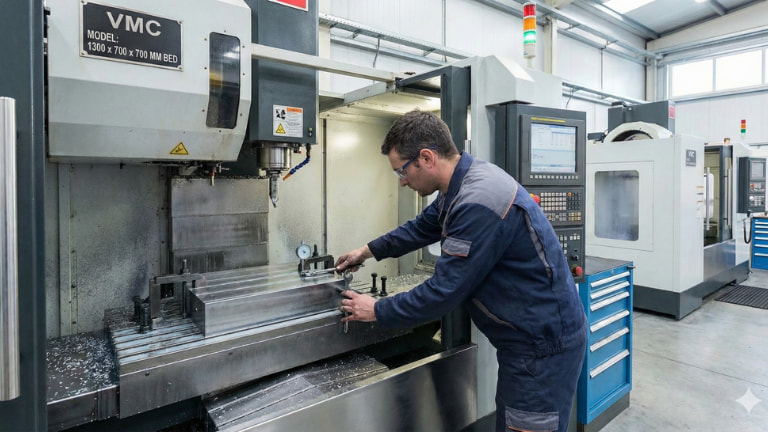
If you’re seeking a top VMC machine job work in Delhi, the competition is fierce. However, not every workshop has the modern technology or the proficient programmers needed to manage 4-axis projects.
A professional VMC components manufacturer, like Global Precision Pvt Ltd, stands out in the Delhi/NCR industrial belt. They not only present machines; they deliver specialization. Whether it is aerospace-grade aluminum or hardened steel, they comprehend how to program the 4th axis to get the most out of the material.
Situated in the industrial hub of North India, Global Precision has carved a niche for itself as a leading VMC machined components manufacturer.
1. Military-Grade Precision – Established by a veteran with a background in the Indian Air Force, the company runs with a level of discipline and focus on detail that is rare in the domain.
2. Modern Equipment – They use high-speed Vertical Machining Centers furnished with 4th-axis rotary tables to manage complicated 4 Axis VMC job work.
3. Quality Assurance – As an ISO-certified corporation, every part is checked against stringent global norms to make sure it fulfills the client’s precise microns.
Why Choose VMC 4-Axis for Your Next Project?
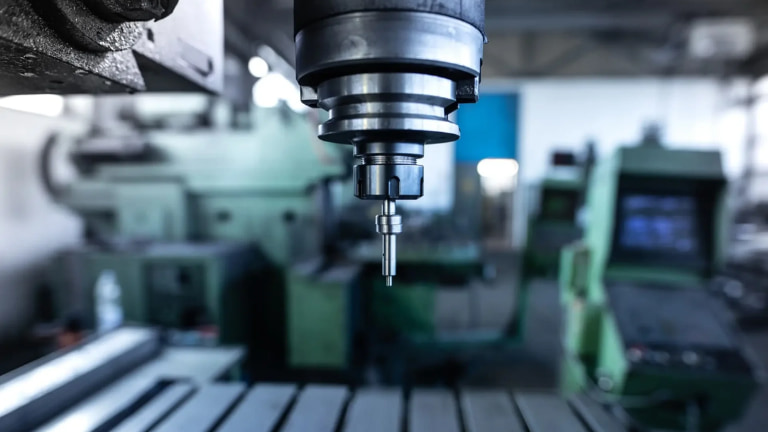
If your project includes components that are more than only a flat plate with holes, you must think about the 4th axis. From 4th axis VMC machining components utilized in high-end drones to specialized valves for the oil and gas industry, this technology is the secret sauce of advanced engineering.
By selecting a partner that has expertise in 4th Axis VMC machining, you are not only purchasing a part; you are purchasing trustworthiness. You are making sure that your assembly fits ideally the first time, every time.
Conclusion
The growth from 3-axis to 4-axis machining is more than only a technical upgrade; it is a change toward a smarter, quicker, and more precise way of building the world. The VMC 4-axis machining advantages, ranging from decreased human mistakes to the capability to make complicated geometries, make it an unbeatable option for any serious engineering project.
In a city like Delhi, where industrial need is high, connecting with a trusted name like Global Precision Pvt Ltd makes sure that your business stays ahead of the curve.