
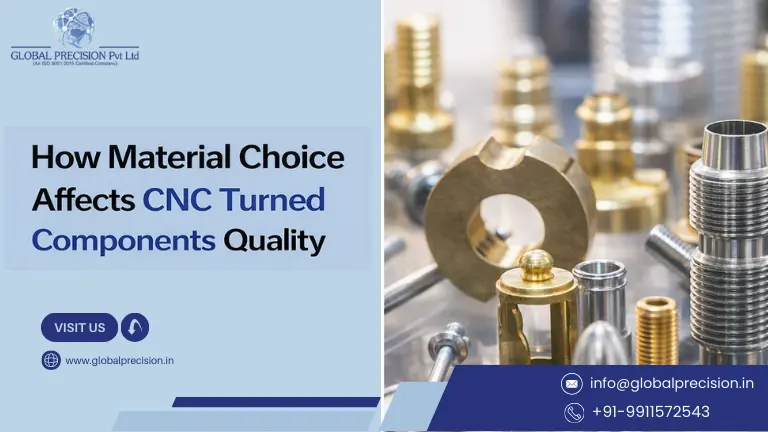

When you look at an ideally finished metal part, perhaps a shiny brass fitting or a sleek aluminum housing, it is simple to forget that its journey started as an easy, raw block of material. In the world of manufacturing, CNC turned components are the spine of everything from your car’s engine to the medical gadgets that save lives.
But here is the secret that every professional precision machining manufacturer knows: the machine is only as good as the material it is cutting. Selecting the appropriate material is not only a digital move. It is the single most crucial decision that decides if a part will last for ten years or fail in ten minutes.
Table of Contents
What are CNC turned components?
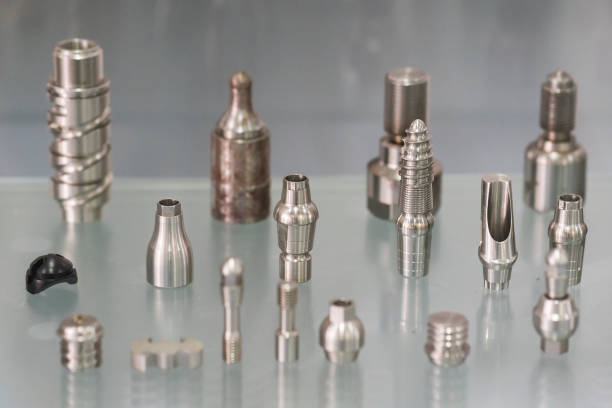
Before we talk about materials, let’s rapidly describe the procedure. Imagine a potter’s wheel, but rather than clay, we utilize metal. The metal bar spins at high speeds while a sharp cutting tool moves against it to shave off layers. This is turning.
Because the part is spinning, this procedure is ideal for making cylindrical shapes like shafts, bolts, and valves. To get these structures precisely right, the material needs to behave predictably under pressure.
Why Material Choice is the Heart of Quality
The quality of a finished element is measured by three things –
1. Dimensional Accuracy – Does it fit ideally where it is supposed to?
2. Surface Finish – Is it seamless, or is it covered in rough chatter marks?
3. Durability – Can it manage the heat, friction, and stress of the real world?
The material you select impacts all three. Let’s look at the key aspects.

Enquiry

Make A Call

Chat With Us
A. Machinability – How Easy is it to Cut?
Some materials are friendly to machines, while others are stubborn.
- Aluminum and Brass are soft and cut like butter. They permit high speeds and leave a stunning, mirror-like finish.
- Stainless Steel and Titanium are the strongest. They produce a lot of heat and can wear out the cutting tools rapidly.
If a material is very hard for the machine’s settings, it can lead to vibrations, which leave a rough, wavy surface on your components. An expert CNC machined components manufacturer understands precisely how to adjust the machine’s speed to match the material’s personality.
B. Thermal Stability – Handling the Heat
Cutting metal makes friction, and friction makes heat. Some materials, like copper, are amazing at conducting heat away. Others trap the heat right at the cutting corner.
If a material grows very much when it gets hot, the dimensions of the component might change. You might begin with a 10mm, but as it heats up during the cut, it grows to 10.1 mm. Once it cools down, it shrinks back, but now it is slightly out of shape.
C. Strength vs. Weight
In industries such as aerospace, weight is everything. You want a material that is as robust as steel but as light as a feather. This is where Titanium and particular Aluminum alloys come in. However, these high-performance materials demand specialized knowledge. Selecting the wrong grade can cause work hardening, where the metal actually gets harder and more brittle as you try to cut it.
How the Wrong Material Ruins Quality of CNC turned components
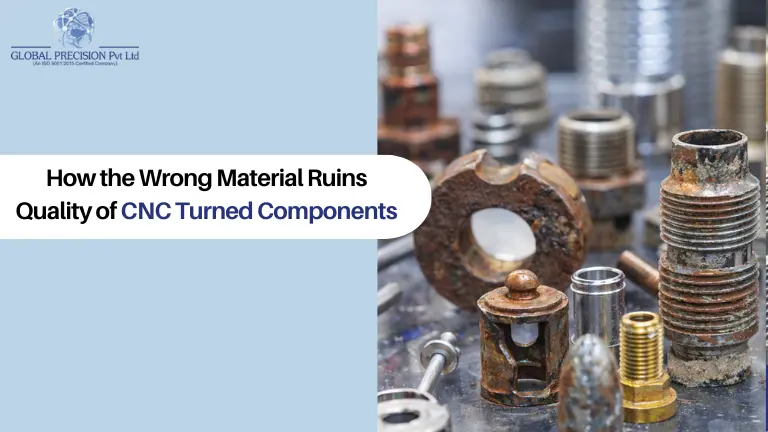
If you try to save money by choosing an affordable, lower-grade material, it usually backfires. Here is what occurs –
1. Burrs and Rough Edges – Soft, gummy metals can tear rather than cutting cleanly, leaving sharp, ugly edges that have to be managed by hand.
2. Tool Failure – Hard materials can snap costly diamond-tipped tools if the manufacturer does not have the appropriate experience.
3. Early Rusting – If you utilize standard steel for a part that sits in a humid environment, it will rust within weeks. A quality manufacturer would have suggested 316 stainless steel rather.
The Role of Global Precision Pvt Ltd in Quality Control

When you work with a primary CNC components manufacturer such as Global Precision Pvt Ltd, you are not only purchasing a piece of metal. You are purchasing their specialization in material science.
1. Expert Material Selection
Global Precision comprehends that the material is the base. They assist customers in selecting the appropriate alloy depending on –
- The environment
- The load
- The budget
2. Precision Testing
As one of the top CNC machined components manufacturers, they do not only guess. They utilize modern tools such as CMM and surface roughness testers to make sure that the material’s properties translate into an ideal final product.
How to Choose the Right Material for Your Project

Choosing the appropriate material for CNC turned components is a balancing act between physics and finance. While a design might look ideal on a computer screen, its real-world success is based on how the raw material reacts to the stresses of the turning procedure.
To make sure your project with Global Precision Pvt Ltd is a success, you have to look beyond only the look of the metal.
1. What are the magnetic and electrical requirements?
Magnetism is not only about sticking to a surface; it impacts how a part interacts with sensors, motors, and electronic fields.
- The No-Go for Magnetics – If your part will be utilized near sensitive medical tools or high-frequency electronics, you have to sidestep most Carbon Steels. Rather, look at 300 -series stainless steel or non-ferrous metals such as Aluminum and Brass.
- Conductivity – If the part requires carrying an electrical current, Brass and Copper are the gold standards. An expert CNC components manufacturer will usually suggest Brass for connectors because it is much simpler to machine than pure Copper while sustaining superior conductivity.
2. What is the Operating Temperature?
Heat is the enemy of accuracy. When a part gets hot, it grows; when it cools, it contracts. If your material can’t manage the heat, your precision part will soon be out of tolerance.
- Extreme Heat – For environments where temperatures exceed 400°C, standard steels may soften or oxidize. This is where superalloys such as Inconel or Titanium are needed. They sustain their structural integrity even when glowing red-hot.
- Heat Dissipation – If the objective is to move heat away from a sensitive area, Aluminum is the best option because of its high thermal conductivity and lightweight profile.
3. Does the Environment Involve Corrosion or Chemicals?
An elegantly machined part is useless if it rusts through in six months.
- Marine & Medical – If the part will touch saltwater or human tissue, 316 stainless steel is the industry standard due to its high molybdenum content, which resists pitting and corrosion.
- Outdoor Use – For elements exposed to rain but not harsh chemicals, Anodized Aluminum delivers a protective oxide layer that controls white rust and keeps the part looking new for years.
Enquiry
Make A Call
Chat With Us
4. What is the Desired Aesthetic and Surface Finish?
In some industries, the part not only has to work, but it also has to look premium.
- The Luxury Look – Brass delivers a classic, gold-like finish that is extremely demanding in architectural hardware and high-end musical instruments.
- Color and Texture – Aluminum is remarkable because it can be anodized in almost any color while sustaining its metallic feel. It also accepts bead blasting very well, which makes a soft, matte finish that hides fingerprints.
FAQs – How Material Choice Affects CNC Turned Components Quality
1. What material is best for CNC Turned Components?
The best material depends on the application, but common choices include aluminum for lightweight parts, brass for excellent machinability, and stainless steel for high strength and corrosion resistance.
2. How does material choice affect the quality of CNC turned parts?
Material selection influences dimensional accuracy, surface finish, tool life, and durability. Poor material choice can lead to rough finishes, tool wear, and reduced component performance.
3. Why is stainless steel harder to machine in CNC turning?
Stainless steel generates more heat during machining and tends to work-harden, which increases tool wear and makes achieving a smooth surface finish more difficult compared to softer materials like aluminum.
4. Does material hardness impact CNC machining accuracy?
Yes, harder materials can cause tool deflection and vibration, which may affect tolerances. Proper tooling and cutting parameters are required to maintain precision.
5. How do manufacturers choose the right material for CNC turned components?
Manufacturers evaluate strength requirements, corrosion resistance, operating conditions, machinability, and budget before selecting the ideal material for production.
6. How does heat generation during CNC turning affect material quality?
Heat generated during machining can cause material expansion, dimensional changes, and surface defects. Choosing materials with good thermal stability helps maintain accuracy and consistent quality.
Conclusion
The quality of your CNC Turned Components is a direct reflection of the raw material you begin with. From the smoothness of the surface to the tightness of the tolerances, everything is based on how that material reacts to the cutting tool. By connecting with a reliable professional, like Global Precision Pvt Ltd, you make sure that every part is made from the best possible material, utilizing the most modern technology available.
Also Read: Top 10 Vertical Machining Center Manufacturers in India